
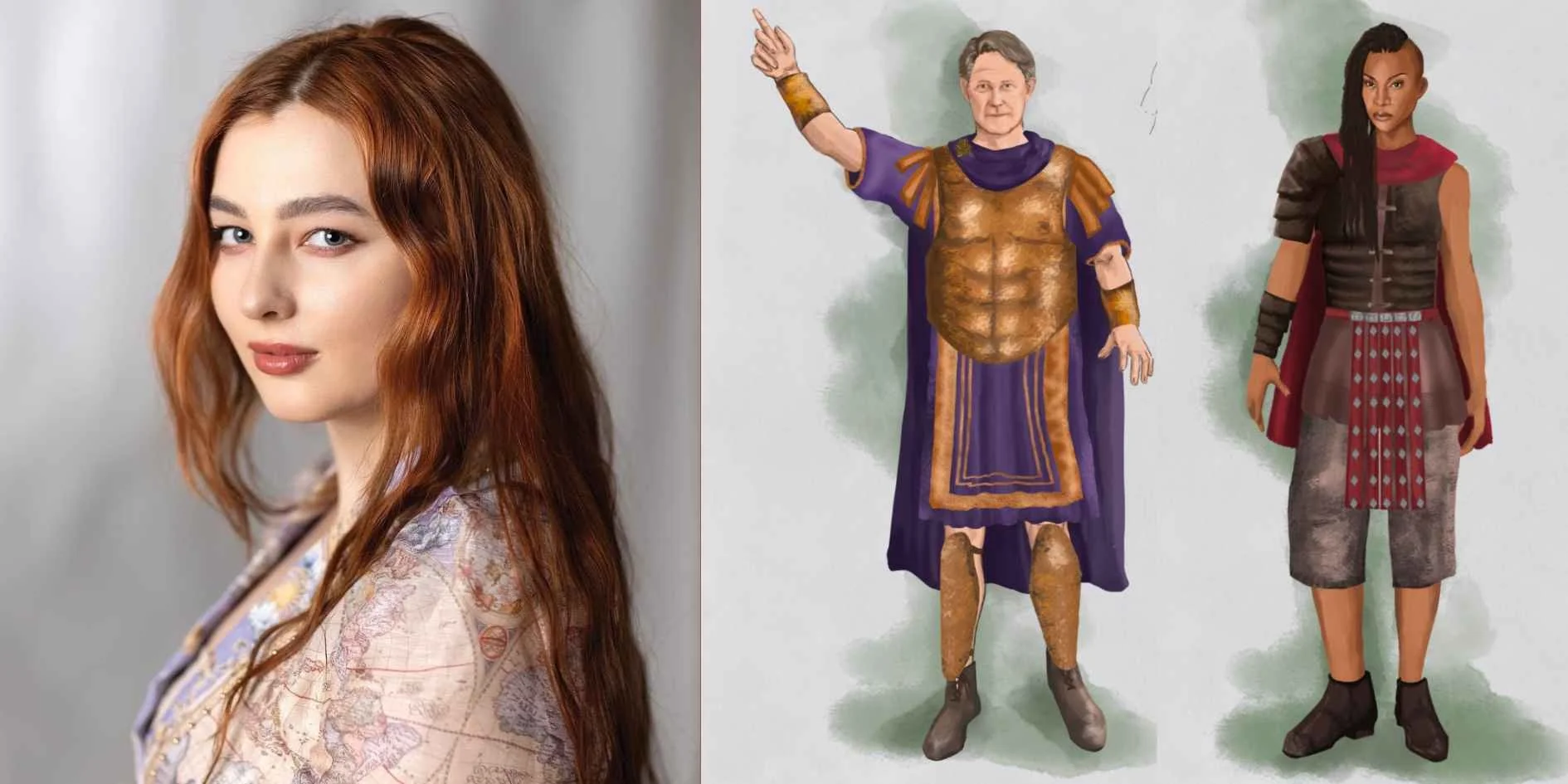
In anticipation of the first performance of The Tragedy of Julius Caesar on June 2, we interviewed our show’s production designer, Garvin Hastings. They spoke about the historical research involved in the costume design process, their goals for this particular production, as well as what makes New York Classical Theatre’s production designs unique.
____
Q: From your perspective, what’s different about the costume design process for productions like ours that take place outdoors, as opposed to traditional indoor shows?
GH: Our process is unique because our production is outdoors. Our actors work as performers and guides for the audience, leading them around a pond in Central Park. Each location becomes a different moment in our story. This presents challenges of terrain and weather, which we have to consider while creating the costumes. They have to have good shoes and a base costume that they can layer different pieces to transform into the multiple characters. It’s also helpful because we have to cart all the costumes back to storage at the end of the night and then cart it back into the parks, so it has to be easily transported as well. So I think that’s a little different than what you’re used to with a typical theater that has a stage and a wardrobe section–we don’t really have that. I also did design it so that even if [the actors] remove a layer, it still conveys the same story. We have these senator capes, but the senator doublets tell the same story and give us the same idea, and that’s to help with heat control. Another thing I like to do is avoid polyester fabrics because they don’t breathe. [Actors] need fabrics that allow air flow to help control heat.
Q: Julius Caesar is a historical play, and although not everything in the play is exactly what happened to the characters in real life, these were real people. Knowing that, do you feel any additional responsibility to depict them as accurately as possible?
GH: Somewhat. Most Americans get a lot of their historical understanding through media of all different kinds, so there is this, especially if we’re doing a period piece, “oh, this is going to be impactful to some audience members.” But at the end of the day, what we’re doing is storytelling. That’s it. So I think as long as we’re telling a story that leaves the audience with questions, then we’ve done our job. But it is also helpful when designing a world or a story to kind of root yourself somewhere. So, when Stephen and I were conceptualizing this, we were looking at that Shakespeare–Peacham drawing–to find a way to mix the Elizabethan era and the Romans. Rooting ourselves in those two periods was helpful to make it cohesive and to make it make sense.
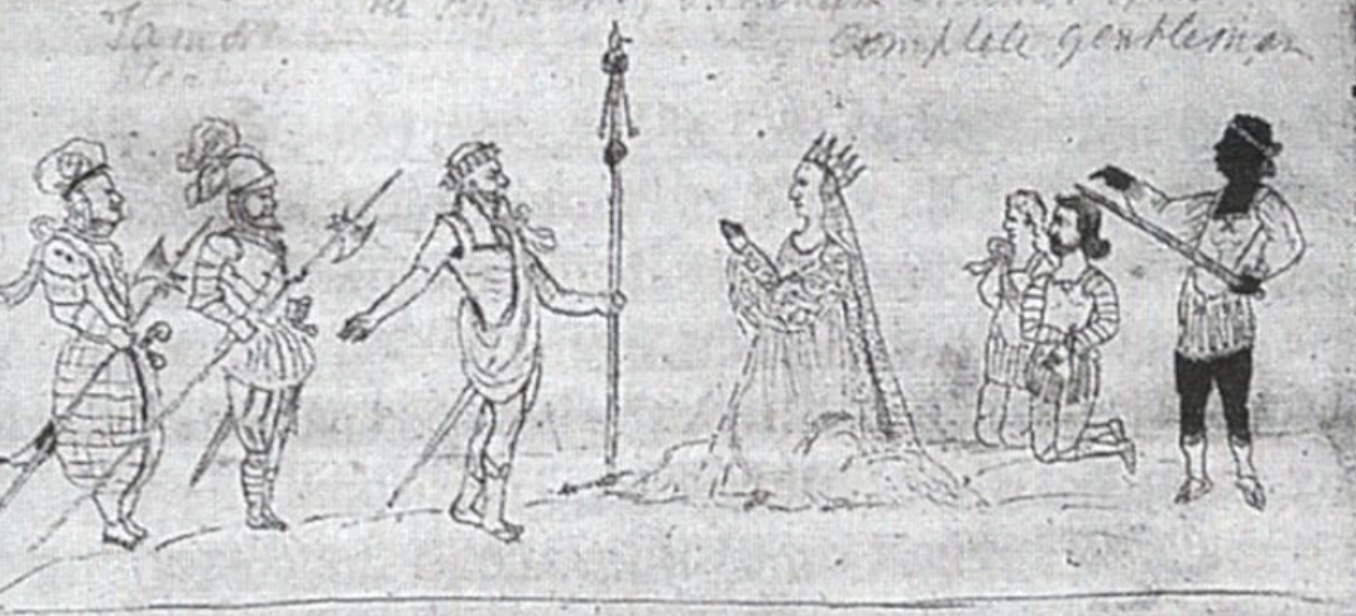
Photo: The “Peacham Drawing,” believed to date from the late 16th or early 17th century, is considered the only surviving contemporary illustration of a scene from a Shakespeare play. Thought to depict a performance of Titus Andronicus, the sketch is attributed to Henry Peacham and offers a rare glimpse into early modern staging, costumes, and performance.
Q: In this production, the director has re-gendered some of the male characters. What challenges, if any, does this present in terms of finding inspiration for their costumes?
GH: It doesn’t really change the research much at all. Now, once we start working with the actors and talking with them about their characters, it might shift a little bit as we come to understand [the character] more through that actor and through their background and who they are, but it doesn’t really change where you find research. The only thing it might change is how you cut and drape a certain garment.
Q: When thinking about a play like Julius Caesar where there’s a conspiracy and all sorts of power struggles, something that typically comes up is the idea of status, which characters have power over other characters, and where that power comes from. How have you tried to communicate the different power dynamics within the play through costumes, especially so that they’re clear enough for people who maybe aren’t so familiar with the play?
GH: Well, we know that Caesar had his political power through the military, so I think you can definitely see that through the armor and who has what armor, and the amount of armor sort of shows status. And when we were researching the Romans, they showed status through what types of clothing they could wear and those stripes on their togas, so we tried to reinterpret that into Elizabethan doublets. So some people will have very few stripes and those stripes build as their status builds as well. I hope that’s clear to an audience, but I think the elaborateness of people’s garments will definitely have an impact.
Q: Something else that stands out is the gloves for the stabbing of Caesar, because you obviously can’t have “blood” on set. Were these gloves the original idea?
GH: We can’t wash things after every single production, so we kind of have to come up with these “theater magic” ways to kind of scream at the audience what’s happening. And we originally thought red gloves because that’s something that’s been done before, but then we thought, what if we make it a little fleshier and it looks like there’s bloodstains on their hands and such. That’s kind of how we came to that solution.
____
Performances of The Tragedy of Julius Caesar run from June 2 until July 5, Tuesdays through Sundays, at 7:00 pm. Click here for more information on locations, reservations, and special events like Family Nights, Dog Nights, and more!