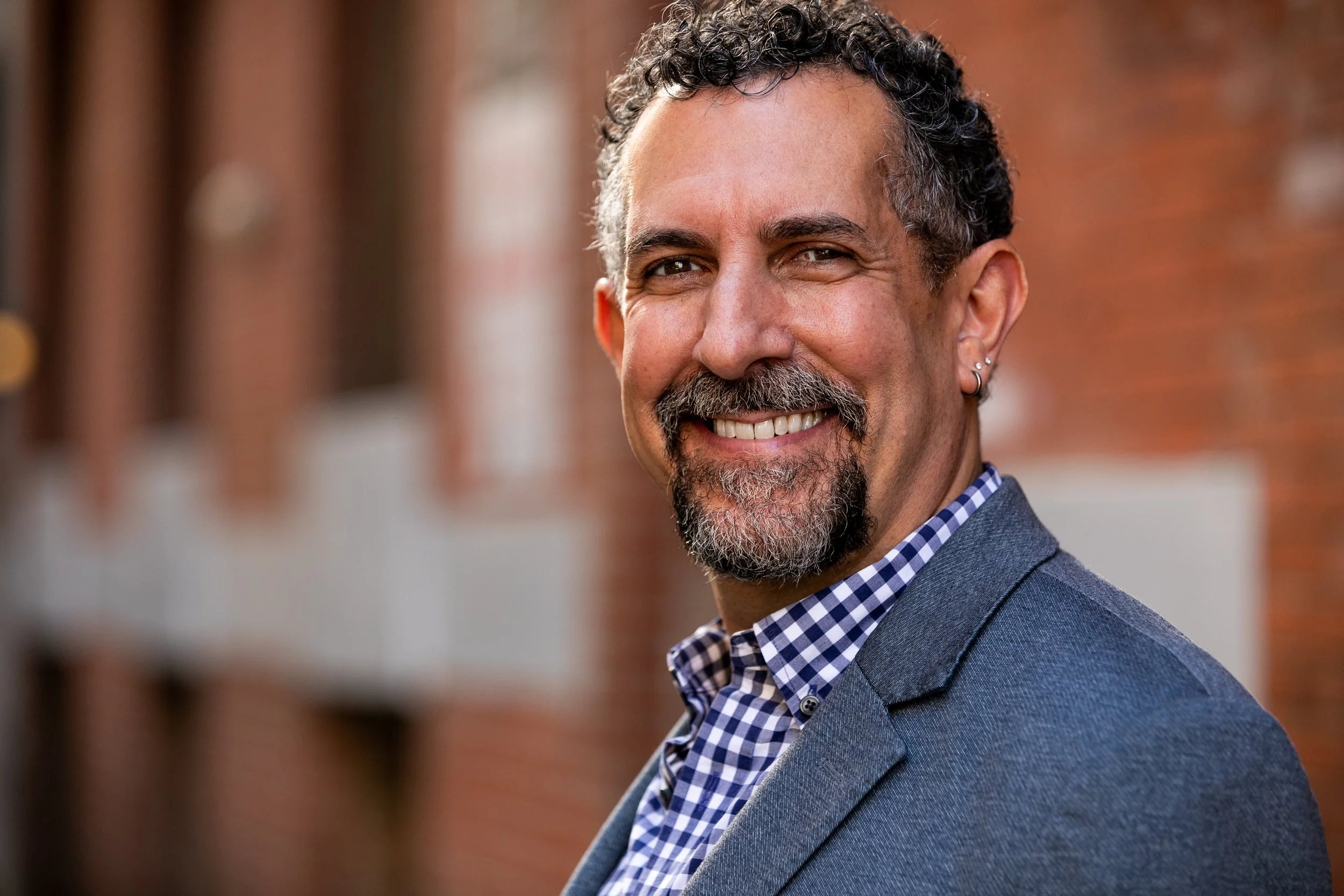
In anticipation of the free public reading of BESHERT on October 26, we spoke with playwright Daniel Kushner about the inspiration behind the play, his research into New York’s immigrant history, and how his background as an actor has shaped his approach to writing.
Selected for development through Cycle 2 of New York Classical Theatre’s New Visions play development initiative, BESHERT takes audiences to New York’s Lower East Side in 1929, where a Jewish tailor and a Syrian immigrant run a dry cleaning business while concealing their relationship. As immigration raids and neighborhood betrayals threaten the life they have built together, the play explores fate, identity, sacrifice, and belonging.
____
Q: BESHERT is your first play to reach this stage of development. What made this the story that pushed you from acting into playwriting?
DK: I’ve been writing plays for about two or two and a half years now, but this was the first one that felt ready. I’ve written a couple of plays before this, but this is the one that I was the most excited about.
Sometimes you write a piece and you’re kind of like, “This is going to stay in the drafts forever. This is never going to see the light of day.” But BESHERT just felt exciting. It pulled on so many different aspects of who I am and what I’m interested in as a writer and as a thinker.
It just kind of leapt off the page. I thought, “This needs to be shared.”
Q: Rather than setting the story in the present day, you take us to the Lower East Side in 1929. Why did you choose that particular time and place?
DK: I have a deep interest in New York history, specifically New York Jewish history. I’m a New York Jew through and through. My family lived in Queens and Brooklyn, but all of them, at one point or another, would have passed through the Lower East Side.
It was a very transient community. People were constantly moving through, but kind of everyone was there. That personal history was really exciting to me.
And the 1920s are obviously an exciting time in our minds, right? Flappers and Prohibition and the Harlem Renaissance. But there’s also this dark undercurrent that isn’t explored as much—anti-immigration policies, racism, and community divides that still matter and impact us today.
All of those things kind of coagulated into this time period, this moment, and this place that I just found so exciting.
Q: The title carries ideas of both fate and destiny. What does the word “beshert” mean to you in the context of the play?
DK: “Beshert” means destiny—what is meant to be. But “beshert” has another meaning, which is a soulmate. So it’s destiny as an intangible thing, and then destiny as a very tangible thing: a person.
I was very interested in that dichotomy. Destiny is something out of our control, right? Something that happens to us. Life puts things in our lap. But just because life throws something at you doesn’t mean that you have to choose it.
With a soulmate—with a person—you still have to choose that person. You still have to choose destiny. There are choices you have to make, and you have to rise up to whatever challenge that may be to embrace who you were meant to be or where you were meant to go.
Those dueling definitions are what really drive the play.
Q: The play brings together queer history, Jewish and Syrian immigrant histories, and the threat of immigration enforcement. What kind of research went into building this world?
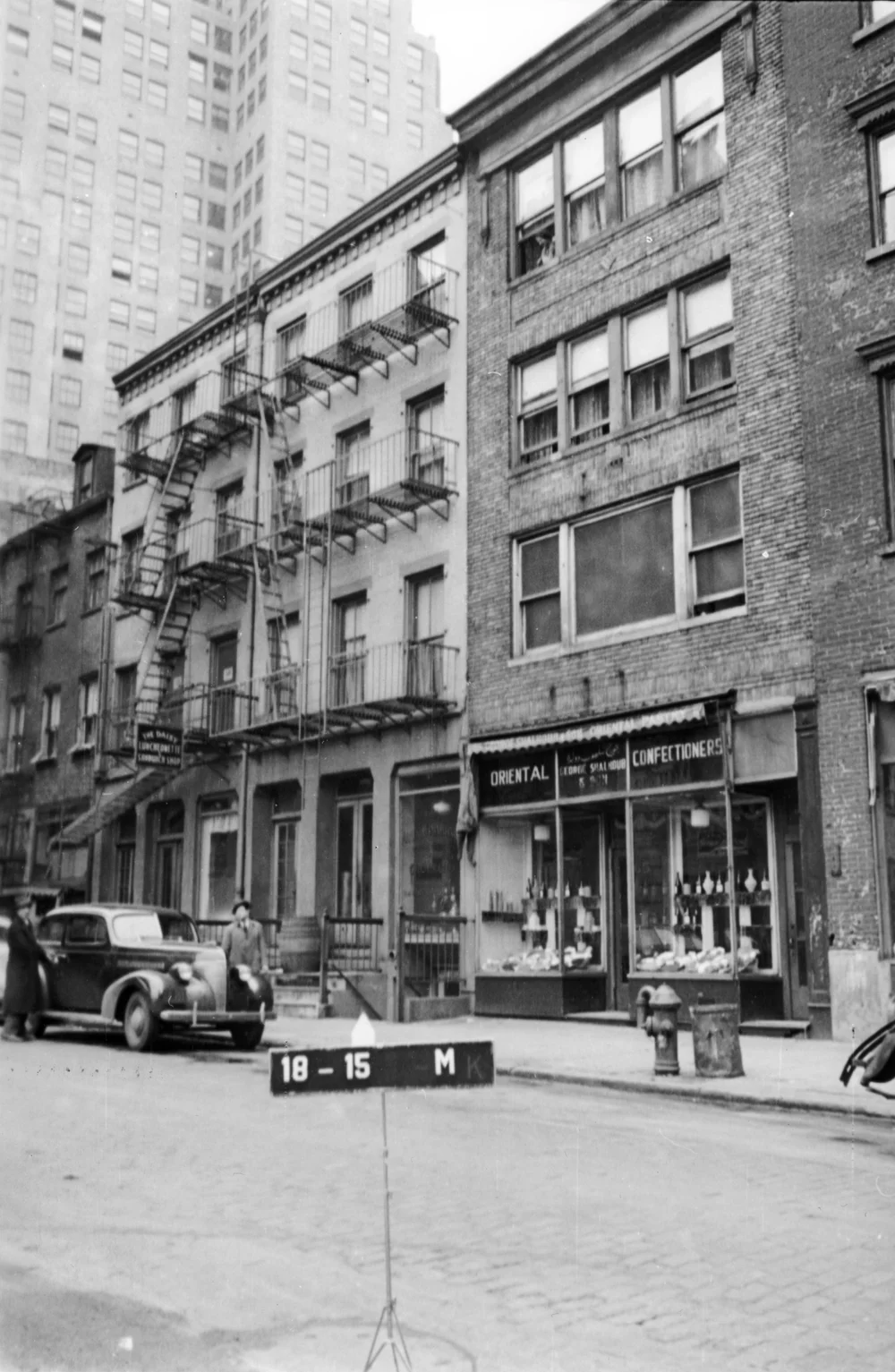
Little Syria: Photo from archives.nyc/little-syria
DK: So much, really. For me, my interest in history is all about what’s been hidden from us or what hasn’t been passed down.
The Lower East Side is a rapidly changing neighborhood. While there are traces of its Jewish history and its history as a multiethnic community, in some ways that has disappeared. Another location the play references is Little Syria, which was a neighborhood around Washington Street, near where the World Trade Center is today. A few decades after the 1920s, that neighborhood had almost completely disappeared.
I looked at old photographs, maps, names of shops and communities—just trying to piece together what these communities used to look like. I also went down to the neighborhood a couple of times. I got to be in these spaces and feel the history in a tangible way.
One of the biggest discoveries that unlocked the piece for me was learning more about the Immigration Act of 1924 and the quota system it imposed. It created much stricter ideas about who was allowed to enter the country and radically restricted immigration from certain parts of the world.
Discovering that history and connecting it to our time period and where we are now put the whole piece into perspective for me.
Q: The play is set nearly a century ago, but many of those tensions feel very current. What connections between the world of BESHERT and today emerged while you were writing?
DK: Certainly immigration was a big one. I started writing this at the beginning of Trump’s second term, when there was a lot of conversation around immigration and policing people.
Another piece that feels always contemporary is that it’s a queer love story. I feel like no matter where we are in history, putting that forward and exploring it is, in some ways, political. There are conversations around who is entitled to love and who deserves that space.
And it isn’t just a queer love story. It’s a queer love story between a white Jewish person and a brown Muslim person. There is an idea of tension between these communities, and that is true in some ways. But what I think isn’t explored as much, and what has been my experience, is the love and solidarity between those communities and the sameness—the overlap.
Difference is focused on so much, but not similarity. I feel like this play was a way to focus on that side of the relationship between our communities, but also between all sorts of ethnic and cultural groups in our country.
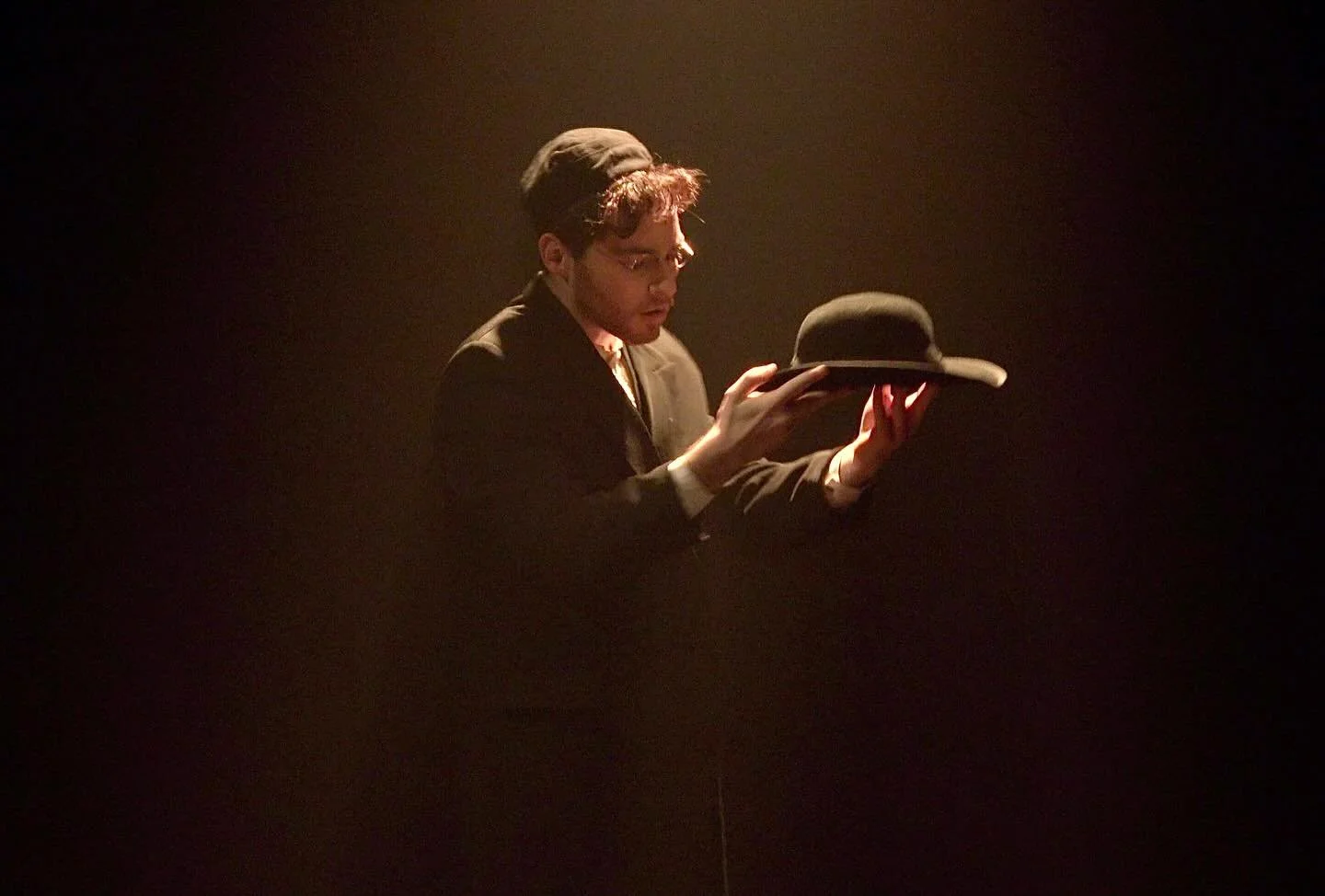
Daniel Kushner in Fiddler on the Roof
Q: You’re also an actor, and you spent several years performing in Fiddler on the Roof. How has that experience shaped the way you approach playwriting and BESHERT in particular?
DK: I think selfishly as an actor. When I take a role, I want to be excited by it. So the job I put on myself as a writer is to make roles that I would want to play—for every role to be substantial or interesting or to do something.
I want to create pieces that are ensemble-focused and give actors a lot to do because that’s what I would want. I want to create a space where the actors want to be there and want to give themselves over to the piece.
And Fiddler on the Roof is baked very deeply into me. I did the tour, and I’ve done a couple of recent productions. It’s one of the most iconic pieces of Jewish theatre—but honestly, just theatre.
I was very inspired by that piece in many ways. I think people who are familiar with Fiddler will notice little things here and there that have infiltrated BESHERT. I wanted to pay homage to Fiddler while also building a new Jewish theatre—a new place for those stories to go.
Q: If you could give audiences one thing to know before they walk into the reading on October 26, what would it be?
DK: To me, BESHERT has become sort of a myth or a fable. It has become a possibility—a version of the past that could have been, but that we would never have remembered.
I want audiences to know that what they’re walking into is something different, but something familiar. I like to think of it as an embrace. The play is challenging, and the play has difficult themes and questions. But at the end of the day, I want people to walk away feeling inspired, feeling hopeful, and feeling empowered to engage in their own communities.
And I also want people to know this: it’s called dry cleaning because they don’t use water! They use chemicals, so it’s not typically dry, but it’s sort of dry.
____
BESHERT by Daniel Kushner will receive a free public reading on October 26, 2026 at 7:00 p.m. at ART/NY South Oxford Space Studios, 138 South Oxford Street, Brooklyn, NY 11217. Directed by Stephen Burdman, the reading is presented as part of New Visions, New York Classical Theatre’s play development initiative supporting bold new works inspired by and in conversation with the classical canon.
Admission is free and open to the public.