🔄
Julius Caesar Program — NY Classical Theatre

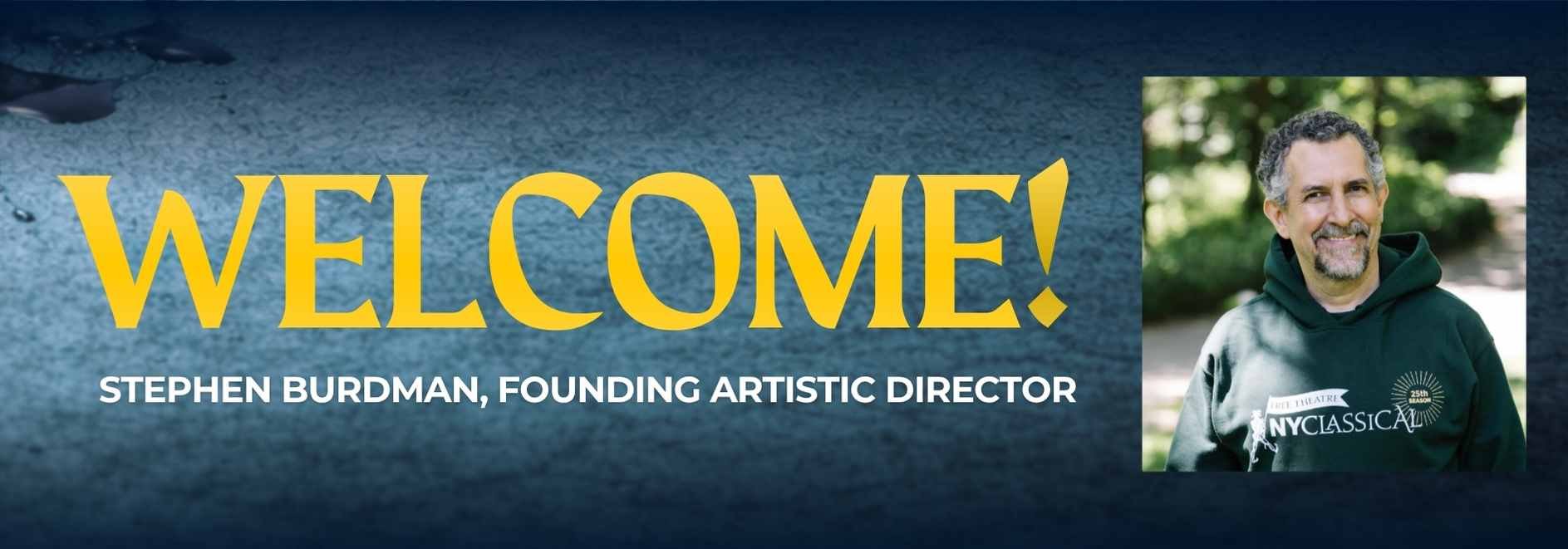
Welcome!

We’re so glad you’re here. For 27 seasons, New York Classical Theatre has brought free, professional theatre to parks across New York City, inviting audiences to gather together under the open sky for stories that still challenge, move, and connect us.

Tonight, you are part of that tradition.

This summer, we present our 50th production The Tragedy of Julius Caesar—Shakespeare’s gripping exploration of ambition, loyalty, persuasion, and the fear of a dictator who wants to become king. Though written more than 400 years ago, the play continues to speak urgently to the world around us, asking difficult questions about democracy, public responsibility, political violence, and the power of the public.

There is something especially meaningful about experiencing this story in public. In parks across the city, strangers gather side by side to wrestle with these ideas together—not online, not alone, but as a community sharing space, conversation, and live performance in real time.

As always, our performances are completely free and open to all. No tickets, no lines, no barriers—just New Yorkers coming together to experience world-class theatre in the heart of the city.

This season also includes special Family Nights with Playday, ‘Rome to Right Now’ evenings with Civics is Sexy, Dog Nights, Pride Night, student and senior matinees, and more—creating new ways for audiences of all ages to engage with the play and with one another.

Whether this is your first NY Classical performance or your fifteenth, thank you for being here and for helping make this work possible.

We hope The Tragedy of Julius Caesar challenges, inspires, and stays with you long after you leave the park.

Enjoy the show,

Stephen Burdman
Founding Artistic Director


About NY Classical

Since 2000, New York Classical Theatre, founded by Stephen Burdman, has brought the magic of classical theatre to life in public spaces across New York City—for free. From beloved Shakespearean works to forgotten classics, our productions transform parks, plazas, and indoor spaces into vibrant arenas for storytelling, making great theatre accessible to all.

Over the past 26 years, NY Classical has presented more than 935 free performances to over 335,000 New Yorkers. By removing financial barriers, we’ve built a diverse, dynamic audience that reflects the city we call home.

In addition to reimagining the classics, NY Classical is expanding the canon itself through New Visions, our play development program that empowers historically excluded voices to define what a “classic” can be.

To learn more about our signature staging style, Panoramic Theatre (which you’re experiencing tonight), click here!

Land Acknowledgement

We congregate on the unceded ancestral land of Lenni-Lenape people. We honor their elders and descendants, the memory of Seneca Village displaced by eminent domain in the design of Central Park, the sanctity of our nation’s earliest and largest African Burial Ground in Lower Manhattan, and the history of the African Grove Theatre in Greenwich Village.

For more information about the land we occupy, the Lenape Center is continuing Lenapehoking, the Lenape homeland, through community, culture and the arts. TheLenapeCenter.com

Environmental Statement

New York Classical Theatre is deeply committed to the restoration of our ecosystem, a reduction in greenhouse gases, and the future of a healthy planet. Our outdoor productions take place in public green spaces and we act as stewards, leaving our parks cleaner than we find them. We actively encourage a re-use/recycle policy at our offices and make every attempt to minimize waste in our productions. All program materials are cellphone based, our lighting/radio equipment is rechargeable, and costumes and props are stored locally and re-used. In addition, we are a proud member of the Broadway Green Alliance, Off-Broadway Chapter.


Leadership

Board of Directors 

Steven Perlstein, Chair
Partner, Kobre & Kim LLP

Jeremy E. Schiffres, Secretary
Sr. Associate Counsel, Commercial Litigation Unit, Metropolitan Transportation Authority

Courtney Mitchell, Treasurer
Vice President-Legal, Principal Finance, Macquarie Capital

Stephen Burdman, Artistic Director
Founder, New York Classical Theatre

Christopher D. Fagan
Administrative Business Partner at Google

David S. Frankel
Retired Partner, Kramer Levin Naftalis & Frankel LLP

William (Bill) Ings
Managing Director, Jennison Associates LLC

Melissa Kuklin
Senior Director of Development, China Institute in America

Dafna Linzer
Executive Vice President and Editorial Director, U.S. News & World Report

Katriana Lopez
Digital Strategist, Oneicity

Samuel Nyitray
Associate, Corporate, Gunderson Dettmer Stough Villeneuve Franklin & Hachigian, LLP

Sid Ray
Professor of English and Women’s and Gender Studies, Pace University

Nick Salamone
Artistic Associate, New York Classical Theatre
& Partner, The Christmas Decorator

Christina Thompson
Head of Operations - Regulatory Affairs, Google

Jon Lukomnik, Chair Emeritus

Maura Harway, Treasurer Emeritus

Don Mayo, In Memoriam

Advisory Council

Lauren Cangialosi, Eric Emma, Susan Falkove, Paul Michael Fontana, Peter Marks, John Michalski


Do you want to make a real difference to our NYC community in 2026 and beyond?

Help us make Off Broadway theatre accessible for ALL New Yorkers!

We are seeking motivated, passionate people to join NY Classical’s Board of Directors and Advisory Council. Whether your love classic playwrights such as Shakespeare, or want to help redefine what it means to be a “classic” through our New Visions program, we want to hear from you.

You can click HERE for more information or email info@nyclassical.org and we’ll get back to you right away!

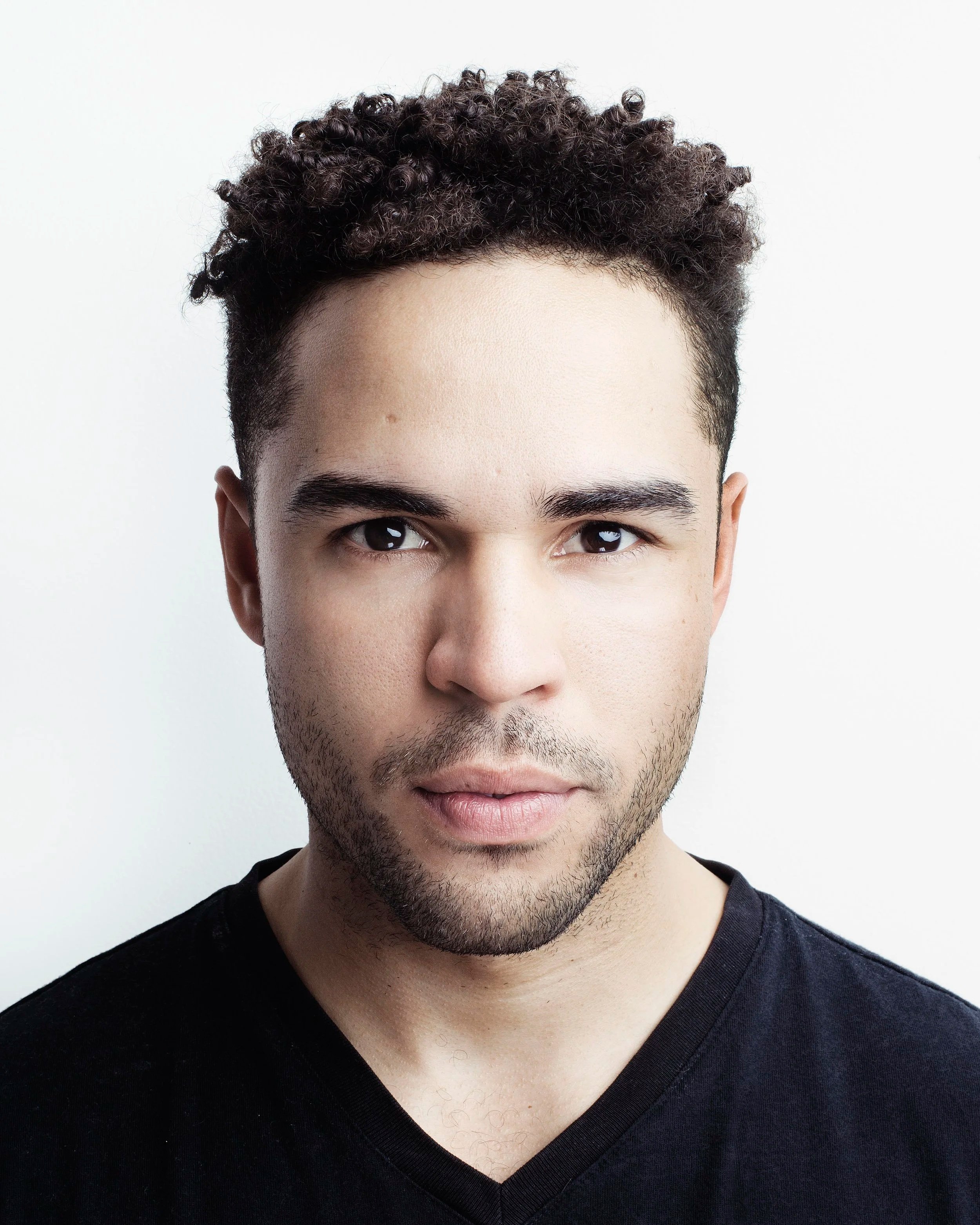
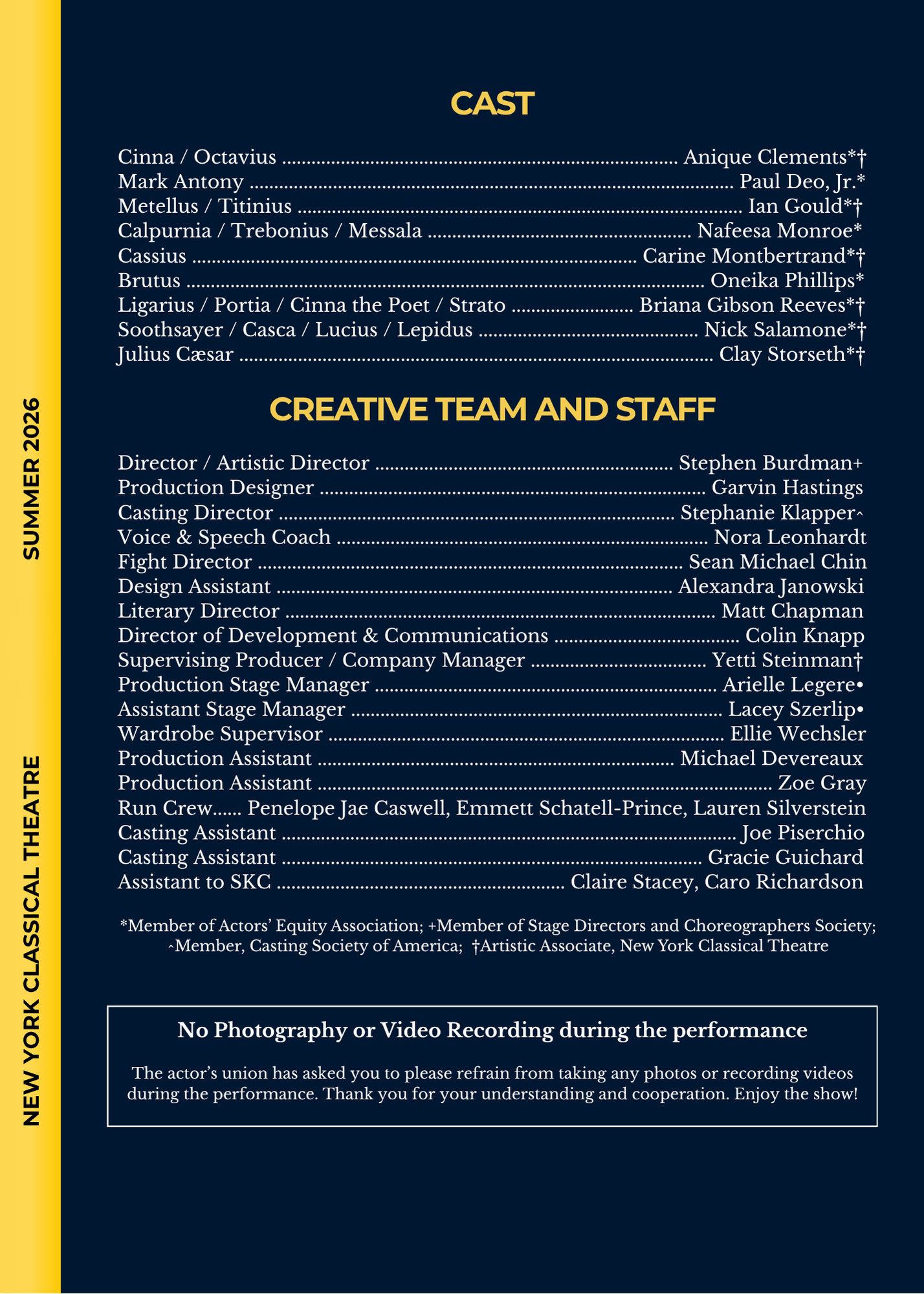
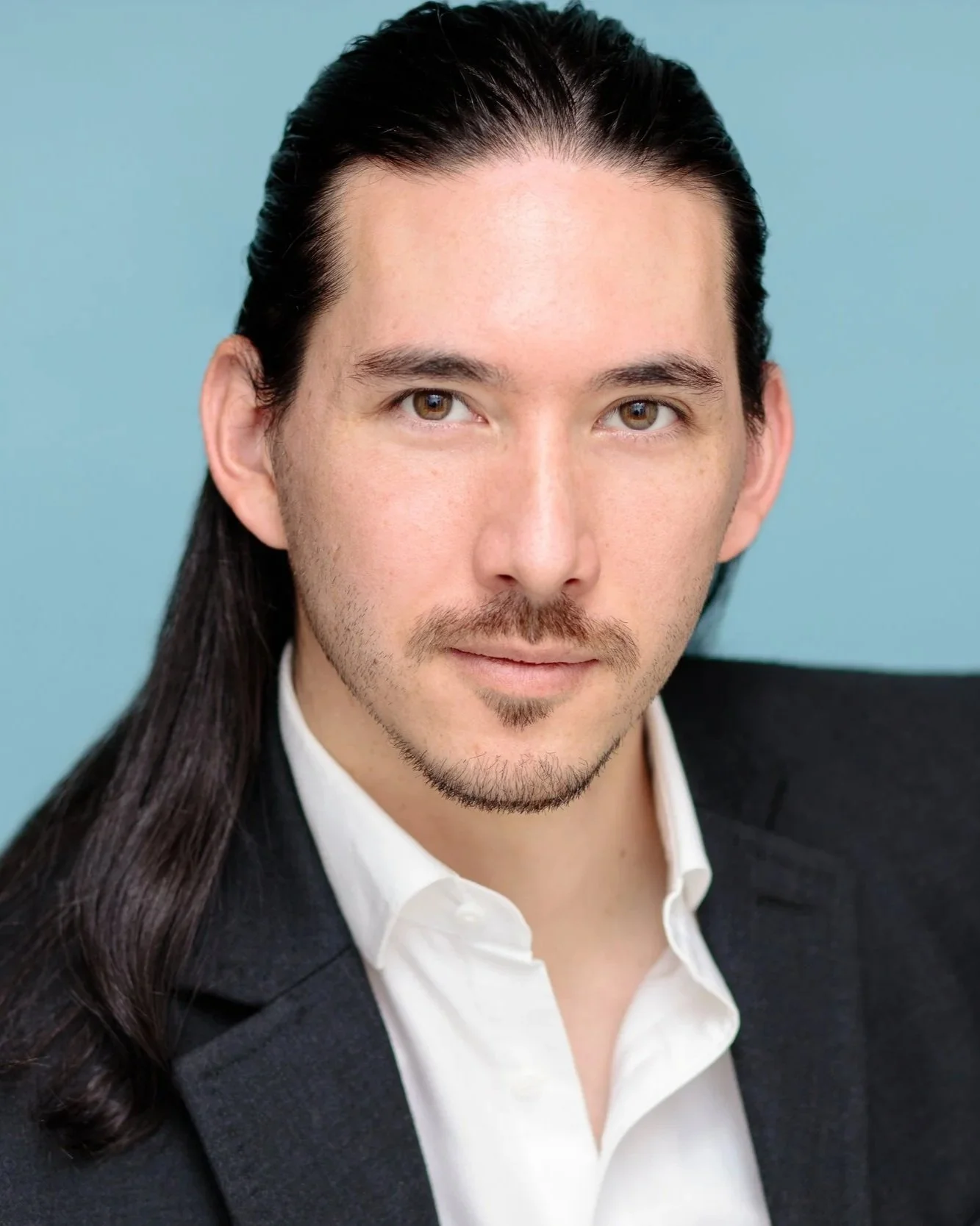
Anique Clements (Cinna, Octavius)

New York Classical Theatre (Artistic Associate): All’s Well That Ends Well (Helena), Henry IV (Poins, Lady Mortimer). A Midsummer Night's Dream. (Resident Acting Company); As You Like It (Smith Street Stage); The Savage Queen (National Black Theatre); Unheard Voices (American Slavery Project); Fefu and Her Friends (Stella Adler Studio of Acting). Regional: Skeleton Crew (Shadowland Stages); The Last Match, Babel, The Nether (Florida Studio Theatre); Cymbeline, The Scottish Play, A Midsummer Night’s Dream, Henry VI: The Rise of Richard (Great River Shakespeare Festival). Three year conservatory training at the Stella Adler School of Acting and BS in Human Services from University of Delaware.

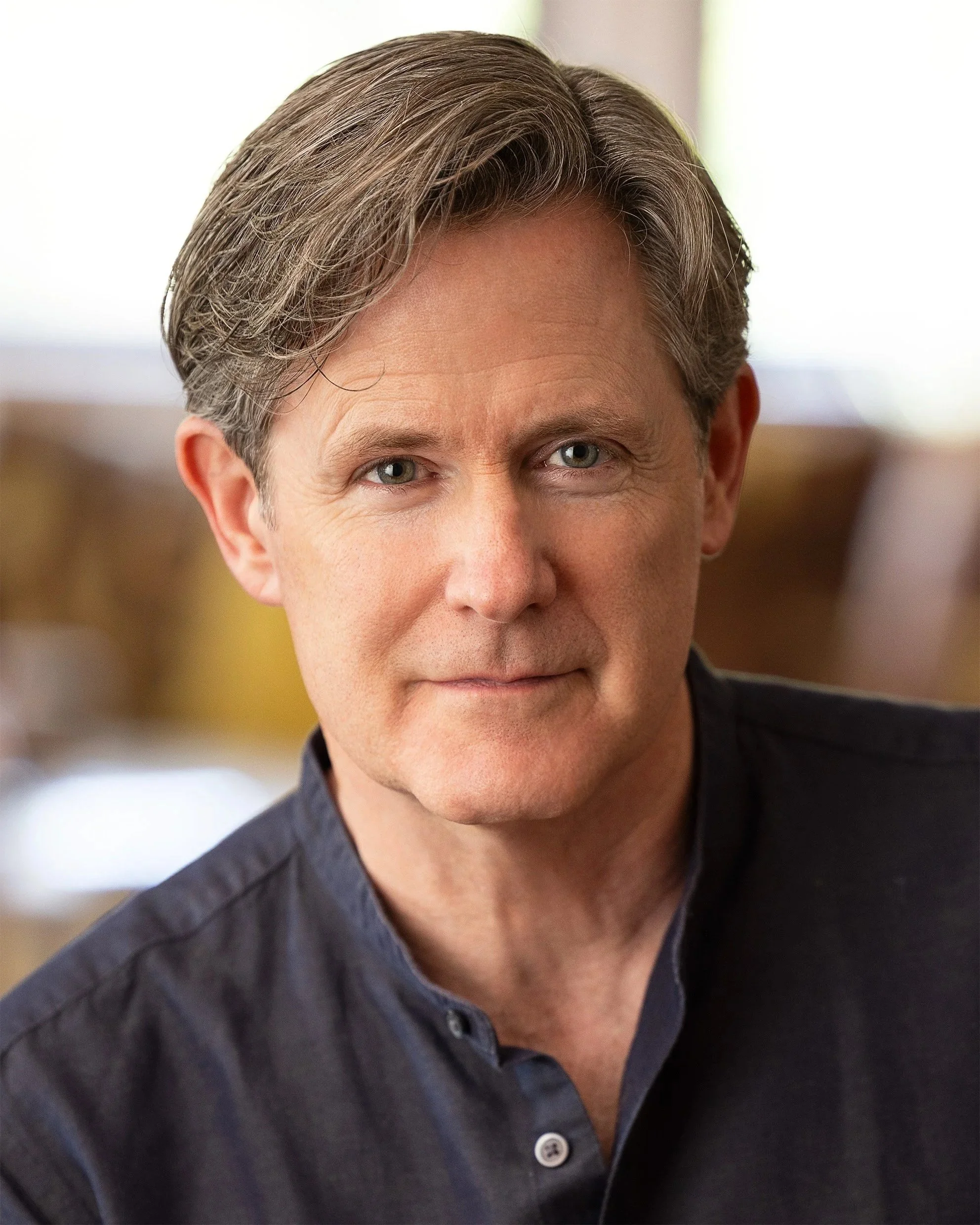
Paul Deo, Jr. (Mark Antony)

New York Classical Theatre: All’s Well That Ends Well (Bertram). New York: Troilus and Cressida (The Public Theater). Regional: Metamorphoses (Berkshire Theatre Group); The Importance of Being Earnest (Pittsburgh Public Theater); Much Ado About Nothing, Hamlet, Romeo & Juliet, Twelfth Night (Shakespeare Theatre Company); The Glass Menagerie (Arizona Theatre Company); A Christmas Carol (McCarter Theater); Hamlet (Chicago Shakespeare); Dangerous Liaisons (Baltimore Center Stage). TV/Film: “Almost Family,” “Animation State,” “Elsbeth,” “High Maintenance,” “Law & Order: SVU,” “Set It Up.” BA from Wesleyan University & MFA from NYU-TISCH. 

Ian Gould (Metellus, Titinius)

New York Classical Theatre (Artistic Associate): Romeo & Juliet (2025 with Prague Shakespeare Company, 2018: Tybalt, Nurse, Friar Lawrence), Henry IV (Glendower, Westmoreland), A Midsummer Night’s Dream (Bottom), The Winter’s Tale (Shepherd), Measure for Measure (Elbow). Off-Broadway: Rosencrantz and Guildenstern Are Dead, Hamlet, Macbeth, A Connecticut Yankee… (The Acting Company); The Show-Off (Peccadillo Theatre Company). Regional includes: Guthrie Theater, Public Theatre of Maine, Theatre at Monmouth, Shakespeare on the Sound, Shakespeare Theatre of New Jersey, Baltimore Center Stage, Idaho Shakespeare Festival, Lake Tahoe Shakespeare Festival, Great Lakes Theater, Luna Stage. International: Shooter (Theatre Konstanz, Germany/TAK, Liechtenstein). Film: “Bad Actor”, “Off Book.” Training: MFA, Shakespeare Theatre Company Academy, BFA, NYU/Tisch. Proud member of Actors’ Equity Association. 

Nafeesa Monroe (Calpurnia, Trebonius, Messala)

New York Classical Theatre debut. New York: Proof (Classics in Color & Quicksilver Theatre Company). International: Trouble in Mind, Cyrano, Sonny’s Blues (Shaw Festival). Regional: Kudzu Calling (Alabama Shakespeare Company); Still (Premiere Stages); Top Girls (A.C.T.); Sweat (Pioneer Theatre Company); Disgraced (Pittsburgh Public Theatre).TV/Film: “Manifest,” “The Punisher,” “Blue Bloods,” “HBO’s Def Poetry.”  MFA from The Academy for Classical Acting at GW University, BA from Wesleyan University (CT), graduate of The Meisner School of Acting. Nafeesa is the founder and Artistic Director of Classics in Color: An INclusive Theatre Company. 

Carine Montbertrand (Cassius)

New York Classical Theatre (Artistic Associate): All’s Well That Ends Well (Countess, Widow), Henry IV (Mistress Quickly, Worcester). Off-Broadway: Resident Acting Company, Classical Theatre of Harlem, The Acting Company, Soho Rep. Regional: Tales from the Guttenberg Bible (George Street/Bay Street Theatre); Comedy of Tenors (Florida Rep); Les Liaisons Dangereuses (Baltimore Center Stage); Private Lives (Hartford Stage); A Flea in her Ear (Westport Country Playhouse); Fool (Alley Theatre); Sherlock Holmes, Othello (Cincinnati Playhouse in the Park); Pioneer; Rep/Shakespeare St. Louis, ATL, UDRep. Audiobooks: Recorded Books, Penguin Random House Audio, Audible. TV/ Film: “Neuman,” “The Red Shoe,” “The Marvelous Mrs. Maisel,” “As the World  Turns.” www.carinemontbertrand.com

Oneika Phillips (Brutus)

New York Classical Theatre debut. Broadway: FELA!1776Spongebob SquarepantsAmazing GraceViolet (Asst. Choreographer). Off-Broadway: Black No More (Signature Theatre); Watch Night (Perelman Arts Center–PAC NYC); Movies, TV Mayhem (Theatre Row); Forces of Nature Dance Theatre. Regional: Merry Wives (Shakespeare Theatre Company DC); A Room In the Castle (Folger Shakespeare Library); 1776 (American Repertory Theatre). *National/^International Tours: *1776; ^West Side Story; *^FELA!. Television: “The Tonys,” “Macy’s Day Parade,” “Spongebob Squarepants The Musical,” “GMA.” Honors: Astaire Award Outstanding Female Dancer/Ensemble (Broadway - FELA!), CBN Island Icon Arts Excellence Nominee, First Grenadian Woman on Broadway, Helen Hayes Award: Best Ensemble in a Play (Merry Wives - Hayes).

Briana Gibson Reeves (Portia, Ligarius, Cinna the Poet, Strato)

New York Classical Theatre (Artistic Associate): All’s Well That Ends Well (Lavatch, Lady B Dumaine), Henry IV (Lady Percy, Bardolph), Richard III (King Edward IV, Catesby, Archbishop). Off-Broadway: Made by God (Irish Repertory Theatre). National Tour: Amazing Grace. Regional: Becky Nurse of Salem (Capital Rep); Flyin’ West (Everyman Theatre); Stick Fly (Meadow Brook Theatre); As You Like It, Jane Austen’s EmmaMan of La ModeRichard III (American Shakespeare Center); Moliere’s Don Juan (Taffety Punk). MFA from Academy of Classical Acting at George Washington University and BS Hampton University.

Nick Salamone (Soothsayer, Lucius, Casca, Lepidus)

New York Classical Theatre (Artistic Associate): All’s Well That Ends Well (King of France), Henry IV (King Henry IV), Cymbeline (Cymbeline), King Lear (2021: Gloucester, 2009: Cornwall), Romeo & Juliet (Capulet, Mercutio), The Rivals (Sir Lucius O'Tigger), A Midsummer Night’s Dream (Egeus, Peter Quince, Fairy), The Taming of the Shrew (Baptista), As You Like It (Duke Frederick, Corin), The Seagull (Dorn), Playing Moliere (Moliere, La Grange, Sganarelle), The Tempest (Antonio), The School for Husbands (Sganarelle), Twelfth Night (Sea Captain, Fabian), Henry V (Archbishop of Canterbury), Richard III (Stanley), Hamlet (Marcellus, Player King, Priest). New York: Loyalty (Hudson Guild, Summerfest Best Actor Award); Macbeth 3 (HERE); Hillary Agonistes (Bleecker Street); Nightshift (Westbeth); Design for Living (Masterworks). Los Angeles: SWIPE (TicketHolder Award, best solo performance), Billy BoyRed Hat & TalesRiffs & CredosWhale Watchers (Playwrights’ Arena); Dogeaters (Kirk Douglas, Backstage West nom.); Arturo Ui (Classical Theatre Lab, Backstage West nom.); Glengarry Glen Ross (Egyptian Arena); The Tempest (Taper Amphitheatre); Medea (Boston Court); Garden (Coast Playhouse); All Souls’ Day (Heliotrope, LA Weekly nom.); The Dying GaulBarefoot Boy, Kennedy’s Children. UK: Red Hat & Tales (British Stage Award nom.); MacbethBill and Eddie, Sherlock Holmes: The Three Students. Film: “Nine Lives”, “All Kinds of Love” (Best Ensemble, Long Beach QFilm Festival).

Clay Storseth (Julius Cæsar)

New York Classical Theatre (Artistic Associate): Romeo & Juliet (2025 with Prague Shakespeare Festival, 2018: Montague, Paris, Apothecary), All’s Well That Ends Well (Lafeu), Henry IV (Assistant Voice & Speech Coach), King Lear (2020: Albany, 2009: Albany), The Importance of Being Earnest (Two Ways: Miss Prism, Dr. Chasuble), Macbeth (Banquo), A Midsummer Night’s Dream (Theseus, Oberon), Measure for Measure (Duke Vincentio), As You Like It (Jaques), The Tempest (Alonso), Twelfth Night (Orsino), Henry V (Exeter), Richard III (King Edward IV), Hamlet (Barnardo, Player Queen, Osric), Cymbeline (Pisanio), Love’s Labour’s Lost (Don Armado). Regional: The Waterfront Playhouse, A Noise Within, Laguna Playhouse, Musical Theater West, ICT, and Will & Company. Playwright’s Arena’s world premiere of Three (Tuzenbach) by Nick Salamone. Clay has been in nine productions at the Edinburgh Fringe, including Nick Salamone’s Fringe First Award winning musical Moscow. TV/Film: “Star Trek: Voyager.” Clay is a CalArts Grad.

Stephen Burdman (Director & Artistic Director)

New York Classical Theatre: Romeo & Juliet (2025 with Prague Shakespeare Festival, 2018), All’s Well That Ends Well, Henry IV, Richard III, The Rewards of Being Frank (co-produced with Cincinnati Shakespeare Company), Cymbeline, King Lear (2021, 2020 Zoom workshop, 2009); The Importance of Being Earnest (Two Ways, 2019 Best Show TheatreScene.net), Macbeth (2017, 2008, 2001), The Rivals, The Winter’s Tale (2016, 2004), Measure for Measure, As You Like It (2014, 2005), The Seagull, Malvolio’s Revenge (workshop), A {15-Min!} Christmas Carol, Twelfth Night (2012, 2002), Playing Moliere, Henry V (New York Times Critic’s Pick), The School for Husbands, Much Ado About Nothing (2010, 2003), Hamlet, Misalliance, Love’s Labour’s Lost, The Comedy of Errors, Mary Stuart, Scapin, The Feigned Courtesans, The Triumph of Love, The Taming of the Shrew, King Ubu, A Midsummer Night's Dream. Producer: A Midsummer Night’s Dream, The Taming of the Shrew, The Tempest, The Rover, Richard III, Cymbeline, The Recruiting Officer, All’s Well That Ends Well. Selected productions: Cymbeline (NYU), The Tempest, Much Ado About Nothing, As You Like It, Waiting for Godot, Hamlet (Outstanding Production 1994 Season, Los Angeles Times), Three Sisters. MFA from the University of California, Irvine, and graduate of the National Theater Institute. Member of the Stage Directors and Choreographers Society since 1994. Recipient of 2022 Sidney Berger award from the Shakespeare Theatre Association for outstanding talent and commitment to the works of William Shakespeare. All my love to Adena (my wife) and son, Zeke, who are the guiding stars of my life.

Garvin Hastings (Production Designer)

New York Classical Theatre: All’s Well That Ends Well, Henry IV. New York: Hungry Women (Soho Playhouse); The Learned Ladies of Park Avenue, The Shadow of a Gunman, An Domstol/En Anderssen, Pericles (NYU Tisch). Regional: Frankenstein (Studio Tenn Theatre Company); The CrucibleOn The Lake (Syracuse Stage). TV/Film: “Major Barbara,” “Floating Carousel.” MFA from NYU Tisch and BFA from Syracuse University.

Stephanie Klapper (Casting Director) and New York Classical Theatre (Artistic Associate)

42 productions from 2003-2026 plus numerous readings and workshops. Proud NY Classical Gala Honoree 2022. Stephanie is ecstatic to continue her long-time collaboration with Stephen Burdman and New York Classical Theatre. SKC’s award-winning work is often seen on Broadway, Off-Broadway, regionally, internationally, film, and television, and streaming platforms. Klapper Casting is an Independent Casting Group, known for their limitless imagination and creativity on a wide range of projects. Stephanie, along with her exceptional team, is dedicated to continuing to expand and champion diversity, equity, and inclusion in the business and is passionate about arts education. Co-host of the podcast Someone’s Thunder. For Bob and Florence, always. klappercasting.com.

Nora Leonhardt (Voice & Speech Coach)

 New York Classical Theatre (Artistic Associate): All’s Well That Ends Well, Henry IVRichard III, King Lear. Other: Romeo & Juliet (Shakespeare@/The Curtain Theatre); The Outsiders (Holmdel Theatre Company, NJ). London: Juliet of the Spirits (London Metropolitan Theatre). MFA in Voice Studies from Central School of Speech and Drama and a BA in Theater from CUNY Lehman College in New York. Certified in Fitzmaurice Voicework. She currently teaches at Pace University. Previously teaching positions: American Academy of Dramatic Arts (NY), E15 Acting Conservatory (South-End-On-Sea, U.K.), and CASS School-London Metropolitan University (U.K.).

Sean Michael Chin (Fight Director)

New York Classical Theatre (Artistic Associate): Henry IVRichard IIICymbeline, King LearRomeo & JulietMacbethHenry V. NYC: Othello (Broadway), The Good John Proctor (Bedlam); black odyssey (Classic Stage Company); Jane Anger (New Ohio Theater); Dracula (Classic Stage Company); Coriolanus (The Public); home/sick (The Assembly). Regional: Medea (Lyric Opera of Chicago); Jane Anger (Shakespeare Theatre Company); Romeo & Juliet (Hartford Stage). International: Medea (Greek National Opera). Fight Director and Certified Teacher, SAFD. Sean teaches stage combat at Muhlenberg College and Pace University, serves as Resident Fight Director for Mercury Store, and is an Associate Choreographer with SDC.


Matt Chapman (Literary Director)

Matthieu Chapman is an author, dramaturg, director, and editor who is an Associate Professor of Theatre at the State University of New York at New Paltz. He holds an MFA from Mary Baldwin University's Shakespeare in Performance Program and a Ph.D. in Theatre and Performance Theory from UC San Diego. He is the author of three books Shakespeare and Antiblack World-Making (Palgrave MacMillan, 2025), Shattered: Fragments of a Black Life (WVU Press, 2023), and Antiblack Racism in Early Modern English Drama: The Other "Other” (Routledge, 2017). He is the co-editor along with Anna Wainwright of Teaching Race in the Early Modern World: A Classroom Guide (ACMRS Press, 2023). He has also published articles in Medieval and Renaissance Drama in England, Theatre Topics, Shakespeare, Literature Compass, TheatreForum, Theatre History Studies, Early Theatre, and othersHis creative writing and essays have been featured in Callaloo, Pithead Chapel, Prose Online, Beyond Words, Revolute, and the Huffington Post.


Yetti Steinman (Supervising Producer/Company Manager)

New York Classical Theatre (Artistic Associate): All’s Well That Ends Well, Henry IV, Richard III, Cymbeline, King Lear, Romeo & Juliet, Macbeth, The Rivals, The Winter’s Tale, Measure for Measure, As You Like It, A {15-Min!} Christmas Carol, The Tempest. Broadway: The Father (MTC). Off-Broadway: someone spectacular; Rinse, RepeatPopcorn Falls (dir. Christian Borle); The Ruins of CivilizationTaking Care of Baby (MTC); The Gravedigger’s LullabyShe Stoops to ConquerHard Love (TACT); A Man’s A Man (CSC); The Jammer (Atlantic). Other: The Enlightenment of Mr. Mole (B.H. Barry Production); A Streetcar Named DesireShe Stoops to ConquerThree Hotels (Williamstown). TV Script Supervisor: Oscars, Tonys, Space Launch Live (Emmy Award), New Year’s Rockin’ Eve, A Capital 4th, NBA All-Stars, NASCAR Awards.


Colin Knapp (Director of Development and Communications)

Colin Knapp is the Director of Development and Communications at New York Classical Theatre, where he leads fundraising, marketing, communications, and audience engagement initiatives to support the company’s mission of providing free, accessible theatre to New Yorkers. His career spans leadership roles at the Metropolitan Opera, Paul Taylor Dance Company, and Detroit Opera, where he specialized in donor cultivation, audience development, and strategic marketing partnerships. Colin holds a Master of Arts Administration from Indiana University and dual Bachelor of Music degrees in Organ Performance and Music Theory from the University of Michigan. A passionate advocate for the transformative power of the arts, Colin is also an organist, carillonneur, and composer—and a proud cat dad to Papageno and dog dad to Lady.


Arielle Legere (Production Stage Manager, she/they)

New York Classical Theatre debut. New York: Dating Comprehension (Dramatists Guild Foundation); In Search of Elaina (Drift In, Act Out); Sustainable Fashion is a Drag, Sustainable Fashion is a Cabaret (zero waste daniel for NYFW); The Devouring (Paradise Club at The Times Square EDITION). Regional: Next to Normal, In The Heights, 25th Annual…Spelling Bee (Connecticut Stage Company); Tiny Beautiful Things, The Christmas Show Must Go On, The Legend of Sleepy Hollow, Rabbit Summer, The Christmas Tree Farm, Funny Like An Abortion (world premiere), Jacob Marley’s Christmas CarolThe Burdens5 Times in One Night (Mile Square Theatre); The 24 Hour Plays: Hoboken (24 Hour Plays Co); box. bag— & blood (Edinburgh Fringe). All my love to Dan and Lola—you are my heart!


Lacey Szerlip (Assistant Stage Manager)

New York Classical Theatre debut. New York: DOOM: House of Hope (Park Avenue Armory). Regional: Wine in the Wilderness (Will Geer Theatricum Botanicum); What Will Happen to All That Beauty? (CATF); Sunday in the Park (Axelrod Performing Arts Center); Polar Express Train Ride (Rail Events Inc.); We Will Rock You, The Gift, Invitation to Dance (Royal Caribbean); On the Verge, Peter and the Starcatcher (Commonweal Theatre Company). BA from SUNY Purchase. So thankful for everything and everyone that has been with me through my journey.


Alexandra Janowski (Design Assistant)

New York Classical Theatre debut. New York: Mr. Burns: A Post Electric Play (Friends Seminary); Elemental (Assistant Set Designer/Costume Designer, La MaMa Experimental Theatre Club). Educational Theatre: Fugue StateYou Got OlderThe Doctor’s Dilemma (Tisch School of the Arts). Film: “Fire Eyes,” “Parkside East,” “Siblings,” “Motherhood,” “Baroque.”


Michael Devereaux (Production Assistant)

New York Classical Theatre debut. New York: Our Class, The Merchant of Venice (Classic Stage Company); Last Call (New World Stages). Regional: Our Class (Calderwood Pavilion, Z-Space SF), Eastline Theatre. Proud double grad of  Loyola University Maryland. Love and gratitude to family, friends, and Miranda!

Zoe Gray (Production Assistant)

New York Classical Theatre debut. New York: Rosencrantz and Guildenstern are Dead, Macbeth (Warp & Weft Co.); The Tempest, Henry IV, Part 1 (Foul Fiend Theatre Troupe); Romeo and Juliet (The Pop-Up Players). MA from Shakespeare’s Globe/King’s College and BFA from NYU Tisch School of the Arts. Co-founder and Artistic Director of Foul Fiend Theatre Troupe.

Penelope Jae Caswell (Run Crew)

New York Classical Theatre debut.  TV/Film: “The Welcome Table,” “Ping Pong and Everything Else,” “The Waiting Room.” 2026 graduate from Tulane University with a BA in Design & Psychology and a minor in French. Excited to join the crew at NY Classical and contribute to this season’s productions.

Emmett Schatell-Prince (Run Crew)

New York Classical Theatre: All’s Well That Ends Well. [New York: The Prodigal Son (NEST Theater); Hole in the Wall (ASU Theater). TV/Film: “Bury Your Gaze,” “Suitcase,” “Bloody Drunk.”]

Lauren Silverstein (Run Crew)

New York Classical Theatre debut. New York: Is He Gay? (All Out Arts). Virtual Production: Confessions of a College Student (Talking it Out: Virtual Arts Festival). Educational: Freedom to Fly, A Classic Love Story, Blind Dancing. BA from Muhlenberg College. Lauren is so excited to be part of this fantastic production.

Explore the program:
Welcome & About Us | Bios | About the Play | Swag & Support | Civics is Sexy | Survey

About the Play

by Dr. Sid Ray, Pace University & Clare Kearns, Brown University, PhD Candidate

Shakespeare’s The Tragedy of Julius Caesar (1599) covers a crucial period of Roman history. It begins in 44 BCE, when Caesar returns to Rome after winning the civil war he began against Pompey four years earlier.

Our play opens with the people celebrating Caesar’s victory and during the Feast of Lupercal. Many Romans admire Caesar—but some leaders are disgusted with his consolidation of power and feel the need to act.

A group of senators spurred by Cassius plots to stop Caesar. To be successful, Cassius needs the respected, even-handed Brutus to join the conspiracy. Brutus, who we have gendered female, is conflicted: she cares about Caesar, but believes the Roman Republic is in danger of becoming a monarchy. She is ultimately persuaded that assassinating Caesar will protect the Republic. The conspirators see themselves as acting for the “common good,” even as their secrecy and manipulation suggest how easily republican ideals can be compromised by ambition, jealousy, and fear.

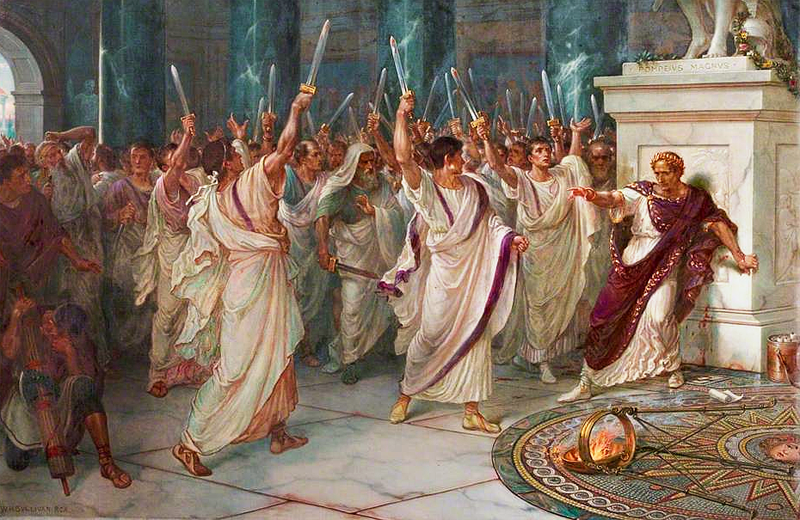
The dramatic assassination—one of the most notorious moments in history and carefully orchestrated by the conspirators—backfires politically. In our version, seven senators stab Caesar to death in public on the Ides of March. After he is killed, Brutus speaks at Caesar’s funeral to justify the act as a defense of the republic, but she speaks with reason, not passion. Then Mark Antony, Caesar’s ally, speaks to the crowd. Through rousing verse (poetic speech) and emotional timing, he turns the crowd into an angry mob against the conspirators.

The city erupts, leaving Antony, Octavius (Caesar’s heir), and Lepidus (another of Caesar’s allies) to collude against Brutus and Cassius’s faction as Rome descends into yet another civil war.

Julius Caesar is not a simple story with clear heroes and villains. Shakespeare sides neither with Caesar nor with Brutus but presents them both as humans with physical and mental strengths and weaknesses who make grave errors in judgment. Instead of promoting one side over the other, Shakespeare invites us to wrestle with the play’s ambiguities and paradoxes and decide for ourselves whether the conspirators were justified or reckless and foolish.

The play raises a host of difficult questions: When does protecting republican freedom begin to undermine it? How do political leaders sway public opinion—through evidence, values, emotion, or fear? How do we differentiate between a good speaker and a good leader? How do we address the inequities that continue to exist even in a republic? What responsibilities do citizens have in moments of uncertainty? And once violence enters politics, can a society ever find its former stability? 

New York Classical Theatre’s Julius Caesar

Our production of the play is adapted for the time we live in and the places we perform. We tell the story with only 9 actors, 5 female and 4 male (6 fewer than Shakespeare’s original company in 1599). Notably, Brutus, Cassius, and Octavius, among others, are portrayed by, and as women. We also remove material that would be needlessly offensive to audiences in 2026.  

History vs. Fiction

Julius Caesar came to power when Rome was at its most unstable. Since 509 BCE, Rome had been an aristocratic republic, a form of government in which power is concentrated among an elite minority. There were three branches of government: the executive magistrates, the senate, and the popular assemblies. To varying degrees, each branch was controlled by wealthy, landowning men; certainly no women or enslaved people were able to participate or vote. At many points in the 400 years before Julius Caesar was born, the Republic was troubled by conflicts between these elites and non-elite Roman men, who often allied themselves with popular politicians promising to champion their causes. Caesar was one such politician, first elected consul in 59 BCE, who was able to leverage his popularity to wage civil war in Rome and declare himself dictator perpetuo, “eternal dictator.”

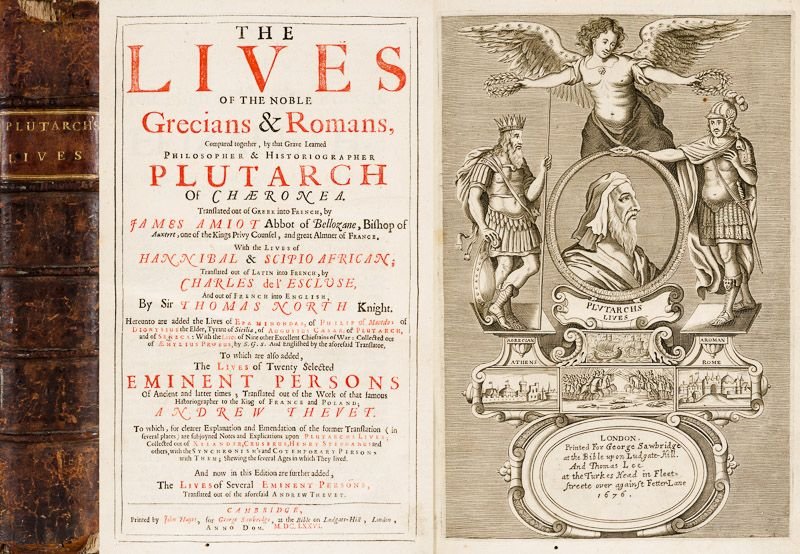
Plutarch’s Lives of the Noble Grecians and Romans

Because Shakespeare’s Julius Caesar is based on Roman history, Shakespeare wasn’t inventing the story from scratch—he was shaping it for dramatic impact by compressing the time frame, developing character ambivalences, and raising characters’ personal stakes. For this play, he drew upon English translations of classical historical writing, especially Plutarch’s Lives of the Noble Grecians and Romans (through Sir Thomas North’s translation), which offered vivid yet distorted portraits of Caesar, Brutus, and Antony. Thus, in this historically-based tragedy, Shakespeare writes with a different purpose than playwrights who invent the plot: the “what” (what happens) is largely known, so the drama comes from the “how” and “why.” He selects the key incidents to include and crafts scenes that illuminate motivation, raise moral stakes, and showcase the power of verbal persuasion—turning recorded history into a political nail-biter.

Dante’s Inferno by Vikram Puri

Major medieval authors differed on their assessment of Brutus. Dante puts Brutus and Cassius in the lowest circle of hell alongside Judas. Chaucer, in “The Monk’s Tale,” deems Caesar a victim betrayed by “false Brutus.” Shakespeare departs from medieval tradition by elevating Brutus to the level of an intellectual, ambivalent politician, torn between private affection for Caesar and duty to the polity. 

Plutarch’s Caesar is more inclined to tyranny than Shakespeare’s Caesar, who leaves us guessing—would he have accepted the crown if it were again offered to him? Other of Shakespeare’s embellishments to Plutarch’s narrative include Caesar’s deafness, the details of Brutus’s and Antony’s speeches, and the character of Lucius, Brutus’s servant. He also compresses the timeline to increase the pace and tension of the story.

Themes and Concepts

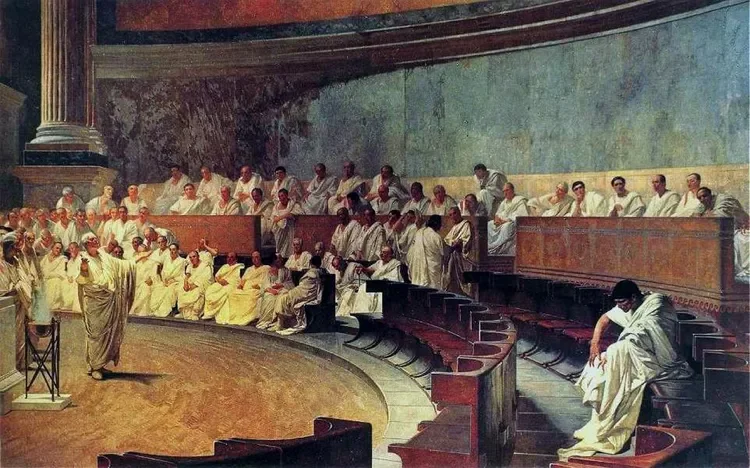
Roman Senate in session on a 19th century fresco in the Palazzo Madama, Rome.

Rome’s Aristocratic Republic vs. the US Democracy: While it is tempting to compare the ancient Roman republic to our constitutional democracy in the United States, the differences are stark. Ancient Rome’s republican system was aristocratic, meaning most political power was concentrated among a handful of elites. Senators in ancient Rome were appointed rather than voted in, and Rome had no independent judiciary.

The mob: Shakespeare gives us a fickle Roman populace that changes its minds in an instant. The people are easily swayed by rhetoric and charisma into becoming destructive forces acting against their own best interests.

Gender: Early modern England was a hostile place for women, but that does not mean they did not have agency! Women were blamed for the “Fall of Man” in Judeo-Christian origin stories. In science and medicine women were perceived to be less perfect versions of men. Following the theory of the bodily humors, they were considered cold and moist, while men were hot and dry. Because of their so-called imperfections, it was believed that women should be controlled and subservient to men.

Women were told to keep to the private world of the home while men were told to go out in public to make their fortunes. Of course, women defied restrictions and attempts to keep them down. After all, the ruler of England for the first half of Shakespeare’s career, Queen Elizabeth I, was a woman!

Ancient Rome was not a happy time for women either. In antiquity, Caesar was often mocked for his supposed femininity and his romantic relationships with other men. In an ancient biography of Caesar, Suetonius writes that Caesar was rumored to have had an affair with the King of Bithynia, often being teased as the “Queen of Bithynia,” and that the politician Curio proclaimed in a speech that Caesar was “every man’s woman, and every woman’s man.” 

Time: Time was truly out of joint for Shakespeare in 1599. In 1582, Pope Gregory had mandated a change from the Julian calendar (named after Julius Caesar) to the Gregorian Calendar. Holidays (holy days) were vestiges of Catholicism, so it was rather unclear what calendar people were using to determine the day off work. England would not shift to the Gregorian calendar until 1752, but other countries had already adopted the new calendar, and there were 10-day discrepancies across Europe. In 1599, Londoners celebrated Easter two weeks before most other Europeans.

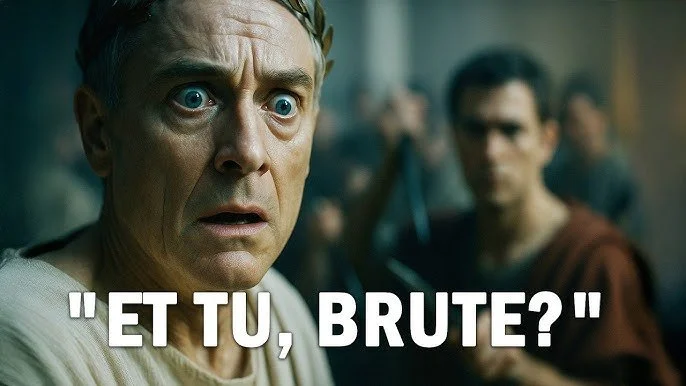
Et tu, Brute?: The famous phrase “Et tu, Brute?” is a modern invention. In antiquity, it was popularly believed that Caesar instead spoke to Brutus in Ancient Greek, not their native Latin, saying “kai su, teknon” (“and you, my child”) as his friend joined in on the assassination. 

There are several ways to interpret this phrase. In one interpretation, “and you, my child” reflects Caesar’s confusion that a friend, whom he addresses with the affection “my child,” would want to kill him. In another, “and you, my child” is understood as a condescending jab at Brutus, who was younger than Caesar. (This interpretation emphasizes that the Greek words kai su were often used on Greek curse tablets to ward off evil, suggesting that saying “kai su, teknon” was Caesar’s way of cursing Brutus for his deed. As Jeffrey Tatum translates it: “See you in hell, punk!”). 

Another interpretation recognizes that kai su, teknon was also the beginning words of a Greek proverb that meant “and you, my child, will have a taste of power,” and holds that Caesar was anticipating Brutus’ own death. 

We will never know if Caesar actually said kai su, teknon to Brutus. Even the ancient biographers who wrote down the phrase were skeptical about its veracity. In any case, these words have become infamous, as they succinctly represent the moral ambiguity and trenchant emotion of Caesar’s assassination.

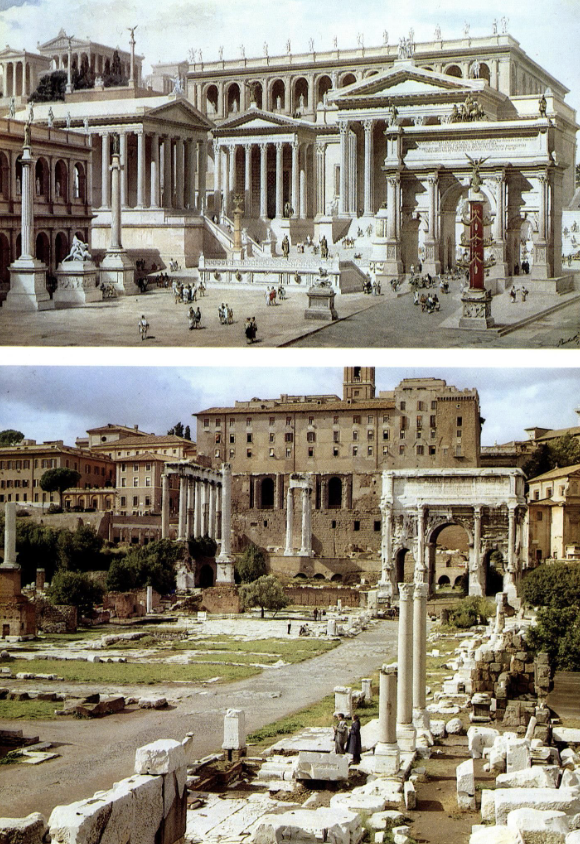
The Roman Forum

Genre

Julius Caesar is a tragedy—but it’s more than the story of one person’s downfall. Caesar dies midway through the play, so the tragedy rests, in part, on the consequences of the act as well as the development of “caesarism”–a system in which one charismatic, popular ruler takes charge. In our production we see that once Julius Caesar is killed, Octavius, his heir, arrives to replace him. Shakespeare’s tragic vision is of a world in crisis that resonates with his own political realities. The play moves quickly, shifting between private plotting and public performance as leaders compete to control Rome’s future. It also includes moments that feel almost comic (especially with the commoners and the quick shifts in public opinion), but there is no real clown or fool in this play as there are in many of Shakespeare’s other tragedies. 

Place

The action of the first three acts takes place in ancient Rome, but then it shifts eastward to battlefields and encampments near and Philippi (northern Greece). The action moves between large areas filled with people and secluded outdoor meeting places. Like Shakespeare we use these settings to suggest that political power isn’t only decided behind (literal) closed doors—it’s also performed, contested, and judged in public spaces (not unlike theatre).

At New York Classical Theatre, we bring that sense of public life into the open air. Throughout the performance, audiences follow the actors through the park as scenes shift from one location to another. Instead of staying in one fixed space, we make the park our stage—our signature performance style, Panoramic Theatre, mirrors the play’s movement between intimate conversations and public events.

Key Characters

As a reminder: Our production of the play is adapted for the time we live in and the places we perform. We tell the story with only 5 female actors and 4 male actors (6 fewer than Shakespeare’s original company in 1599). Notably, Brutus, Cassius, and Octavius, among others, are portrayed by, and as women.

From left to right: Julius Caesar, Brutus, Cassius, Mark Antony, Casca, Portia, and Calpurnia.

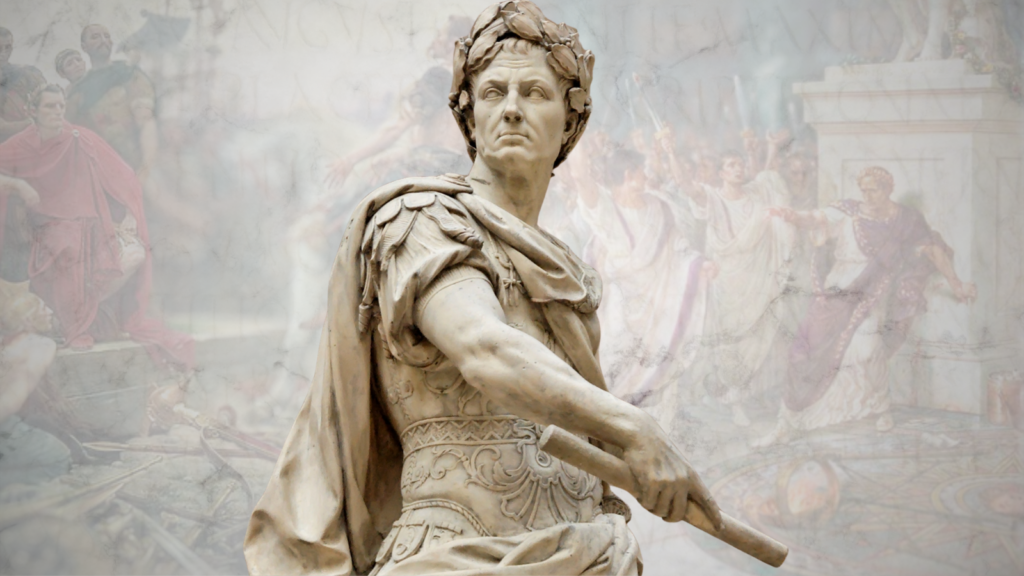
Julius Caesar: A celebrated Roman warrior returning from victory against a formerly beloved Roman leader–Pompey the Great. Caesar is admired by the plebeians and wields immense power—so much that the senators fear he will become a king (a terrifying idea even in this form of republic). Caesar is confident and ambitious, but Shakespeare makes him deaf in one ear and susceptible to epileptic seizures (the “falling sickness”). Whether Caesar is seeking absolute authority or just basking in public adoration is one of the play’s central questions.

Brutus: A respected Roman senator known for honor, restraint, and devotion to Rome who “sits high in all the people’s hearts” (1.3.157). The play’s moral center, Brutus wrestles with her conscience about killing her friend, who she fears will become a tyrant. Brutus nevertheless joins the conspiracy believing she is acting for the good of the republic. A deep thinker, Brutus is a precursor of Hamlet and Macbeth, characters Shakespeare developed later in his career.

Cassius: The main architect of the conspiracy, Cassius “has a lean and hungry look” (1.2.193). She distrusts Caesar, resenting and envying his authority. She is a “machiavel”—who knows how to manipulate Brutus’ values and anxieties in order to recruit her. Cassius believes the people need to act against a ruler who consolidates too much power: “The fault, dear Brutus, is not in our stars / But in ourselves, that we are underlings” (1.2.139-140).

Mark Antony: Caesar’s close ally, friend, and one of the play’s most effective political strategists—“a shrewd contriver” (2.1.178). In the wake of the conspiracy, Antony appears loyal and grieving, but he quickly proves himself a brilliant orator who can move a crowd. His Act 3 funeral oration turns the tide—and serves as a lesson in the power of rhetoric. But, is Antony devastated by Caesar’s death, or does he see it as an opportunity for his own political ambitions?

Casca: A blunt, cynical, superstitious senator. Casca narrates the events and serves as a bridge between the private world of conspiracy and the public world of rumor, spectacle, and opinion.

Portia: Brutus’s spouse. Intelligent and perceptive, Portia insists on being treated as an equal partner, not someone to be protected by secrecy. To get her wife’s respect, she wounds herself in the thigh. Later she will “eat fire.” Through Portia, Shakespeare shows the personal cost of political life—and the strain that secrecy and fear place on relationships. 

Calpurnia: Caesar’s wife. Calpurnia dreams of her husband’s demise and fears the worst. She pleads with Caesar to stay home on the Ides of March. Her character highlights a recurring theme in Shakespeare: ignoring warning signs (omens, dreams, feelings) can have devastating consequences. Like Portia, Calpurnia is ignored and side-lined.

Octavius: Caesar’s young heir who appears for the first time in Act 4 as ruthless, cold-hearted, and decisive.

Cinna the conspirator vs. Cinna the poet: Cinna is one of the 7 conspirators who stabs Caesar to death. When the angry mob later confronts Cinna the poet, a different person, they tear her apart for having the same name and “for her bad verses.” This moment indicates the collateral damage of political instability and the price paid by people in the arts.

The Roman Citizens (the Plebeians / the Mob): Not one person, but a powerful force that can quickly turn. The plebeians can celebrate, demand, panic, mourn, and rage—and they can be swayed by a persuasive speaker. Shakespeare makes the crowd central to the tragedy: public opinion becomes a formidable weapon in the pursuit of power.

Caesarian Fun Facts & Questions:

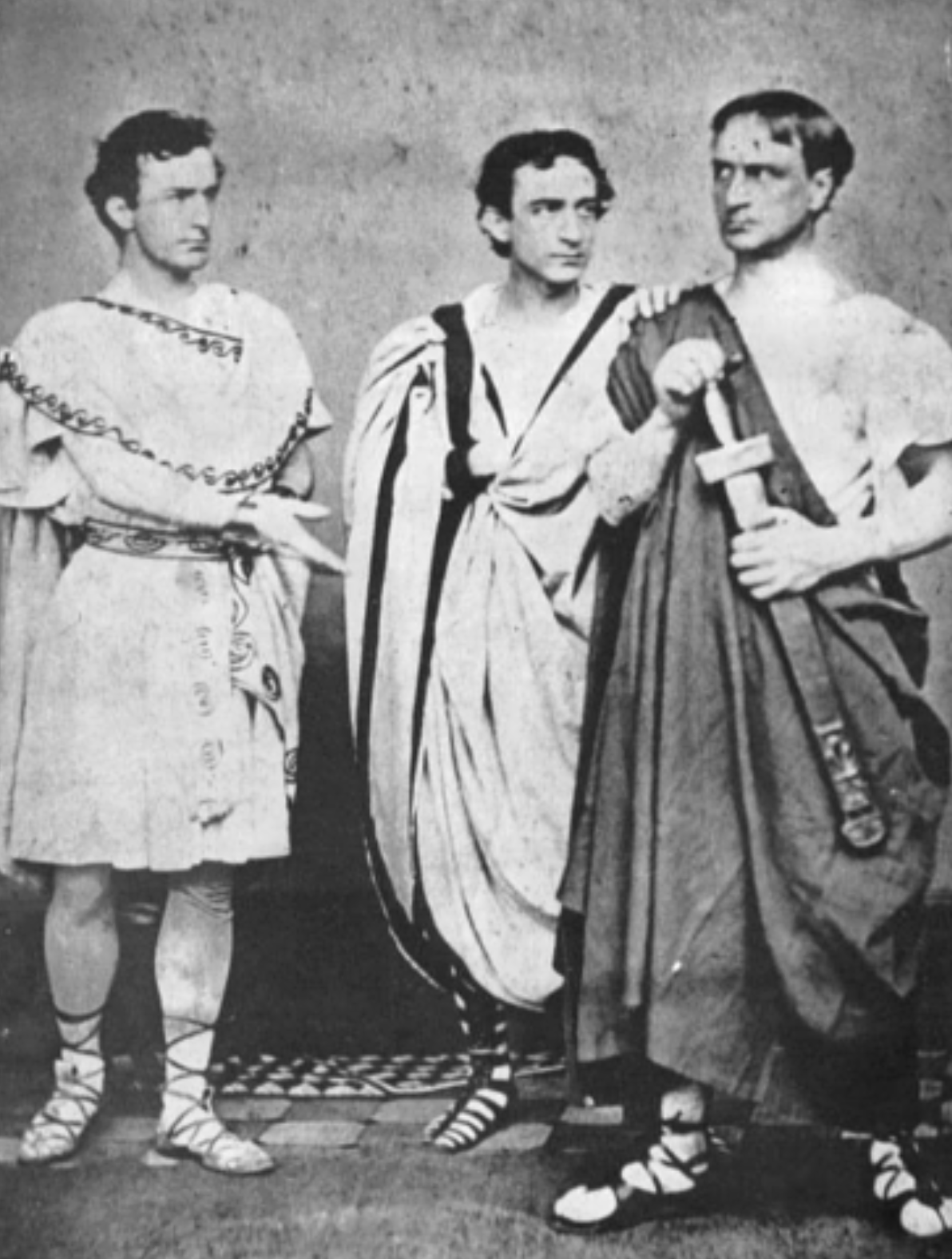
John Wilkes Booth, Edwin Booth and Junius Brutus Booth Jr. in Shakespeare’s Julius Caesar in 1864.

–The King of Diamonds in a deck of cards depicts Julius Caesar back from the Gallic Wars with a battle axe. The diamonds suggest his wealth and power. Why do you think he is depicted as one-eyed?

Julius Caesar has 40 speaking parts, but we know it was performed with only about 15 actors in 1599. How do you think 15 of the Lord Chamberlain’s men performed this many roles?

–Shakespeare coined the term “assassination,” using it for the first time in Macbeth. The word did not yet exist when Shakespeare wrote Julius Caesar.

–In the US, the three infamous Booth brothers starred in a one-night benefit production of Julius Caesar in 1864 at the original Winter Garden Theatre in Lower Manhattan. Edwin, the leading Shakespearean actor of the day, played Brutus, Junius Brutus played Cassius, and John Wilkes played Antony. John Wilkes Booth would assassinate Abraham Lincoln less than 5 months later, shouting “Sic semper tyrannis” (Latin for “thus always for tyrants,” comparing Lincoln to Caesar).

–The Globe Theatre opened the same year Shakespeare wrote Julius Caesar. It is probable that Shakespeare chose this play to debut the theatre that would make him a rich man. Why do you think Shakespeare chose this tale to tell for such a momentous occasion?

Julius Caesar was a very popular play in the early days of the American republic, the first known production occurring in Philadelphia in 1770. The first NYC production opened downtown on John Street in 1794. Why do you think the play was popular in the early days of the United States?

–Some form of the word ”honour” or “honourable” occurs nearly 50 times in Julius Caesar. And variations of the word “love” appear 54 times. Why do you think these words are so prevalent in the play?

–The Russian “tsar” or “czar” and the German “kaiser” derive from the Latin “caesar” and the concept of Caesarism.

– “Great Caesar’s ghost!” is Perry White’s favorite exclamation in the Superman franchise. It references Act 5 when Brutus, wracked with guilt, encounters Caesar’s ghost, but the line is not Shakespeare’s.


Final Thoughts

Shakespeare wrote Julius Caesar as a blockbuster to inaugurate the Globe Theatre, which was built the same year the play was penned. Since 1599, this Roman drama has never gone out of style. Perhaps its enduring popularity owes something to the play’s central paradox—that in killing Caesar for potential despotism, the conspirators ironically guarantee despotism. Or maybe it’s just good theatre. Whatever the reason for its lasting success, The Tragedy of Julius Caesar narrates a deeply political story that resonates across political contexts from the Elizabethan age to the American Revolution, to the American Civil War, up through today.

Enjoy the show!


Help Us Keep Theatre Free for Everyone

NY Classical is funded 100% by generous donations. If our work has ever moved you, surprised you, or made you feel at home in this city, please consider making a gift today to keep this theatre free and accessible to all.

Make a tax-deductible gift of $25 or more at the show and receive a NY Classical fan. Give $50 or more at the show and we’ll thank you with an exclusive t-shirt. Or, consider joining our Royal Court to deepen your impact all season long!

Please note: T-shirts and fans must be picked up at a show or at the NY Classical offices - we do not ship.

Thank you to our supporters and sponsors!


The Big Question:

Rome had a Roman Republic. Then they lost it.

It didn’t happen overnight, but slowly, through fear, ambition, and people who thought they were doing the right thing. Shakespeare wrote Julius Caesar in 1599 but this can happen today. When power is taken, who pays the price?

What to Watch For:

Who actually holds power vs. who holds the title?

How do the conspirators make assassination sound like duty?

Watch the crowd before and after Antony speaks. What changes?

Which systems exist to protect the republic and do they hold?

Level Up with the ROME TO RIGHT NOW Playbook

Rome to Right Now is a civic playbook from Civics Is Sexy and New York Classical Theatre that connects Shakespeare’s Julius Caesar to urgent modern questions about power, persuasion, and democracy.

Civics Is Sexy is an organization that creates culture-driven and emotionally resonant civic learning experiences through storytelling, film, media, and the arts. Learn more about the NY Classical and Civics is Sexy partnership here.


Family Night Program